The Epic AI MegaJam revealed its theme at 2 p.m. on November 11: Director’s Cut.
I had a little trouble figuring out what I wanted to do with it. It’s an abstract theme; you could take it almost anywhere. I assumed we’d see plenty of games about time control, filmmaking, and editing, and I wanted to try interpreting it in a more meta sense.
I have a tool I developed, the Shrimp Hub Swarm Controller, and I wanted to see whether I could use it to build something massive.
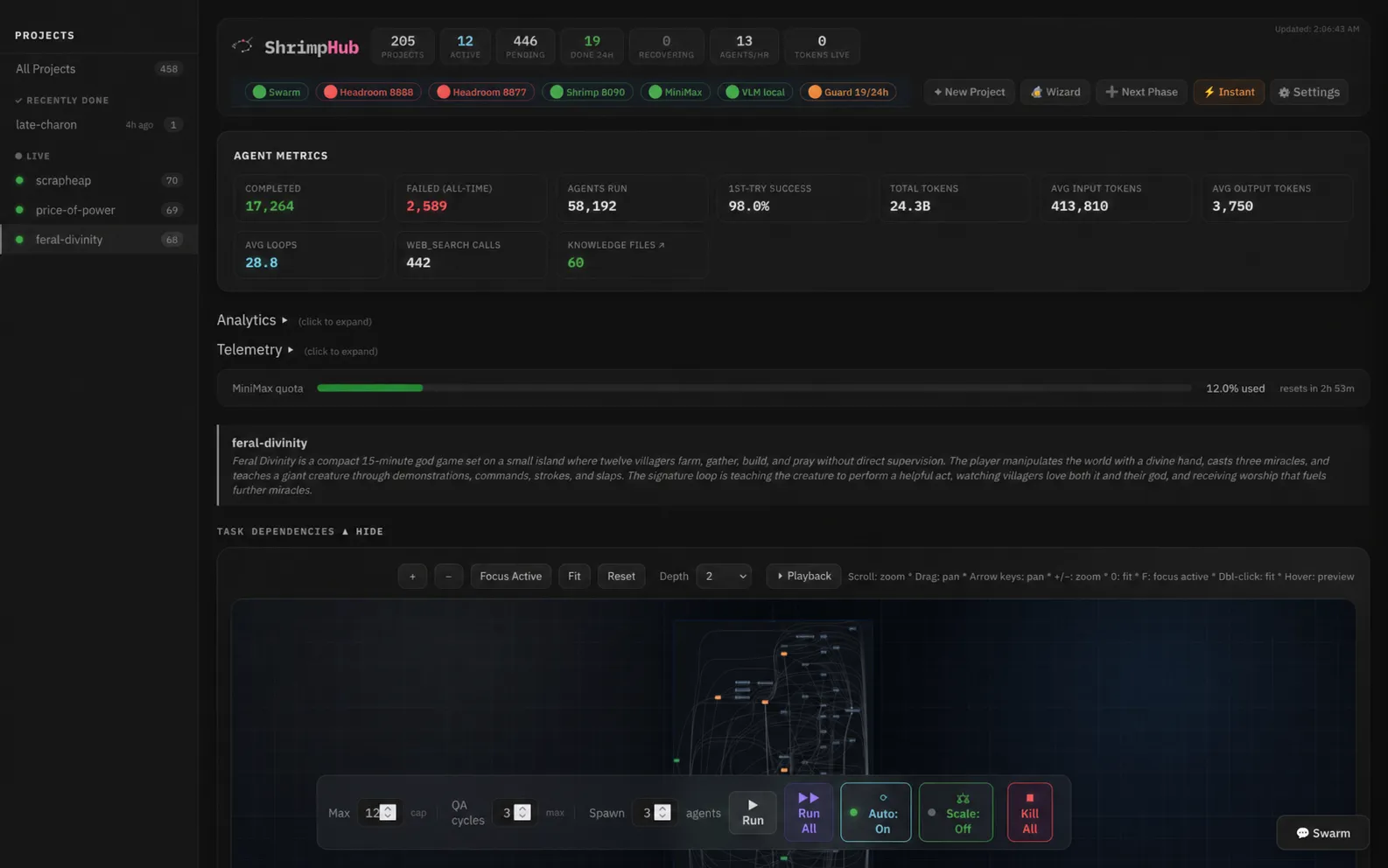
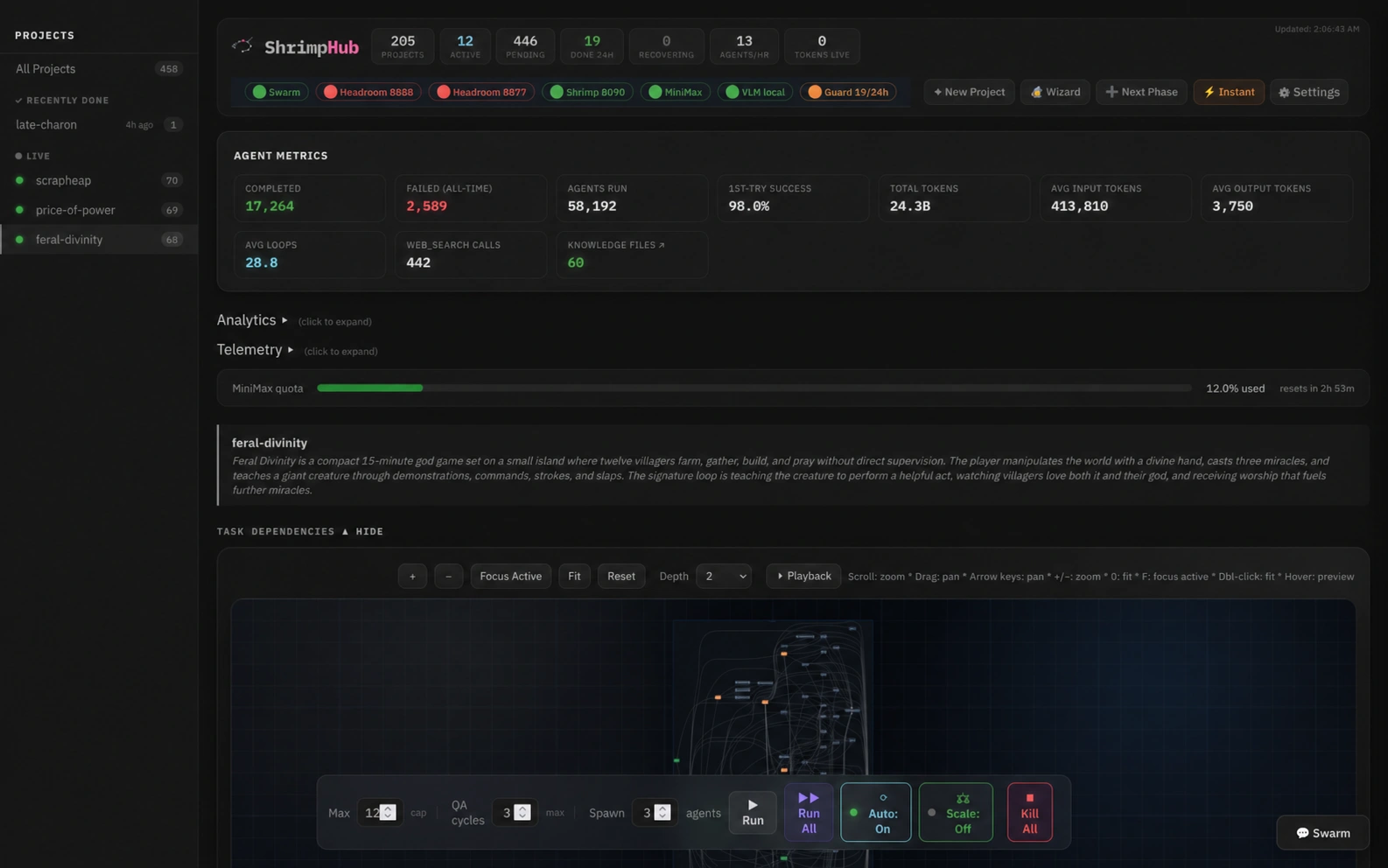
One of the points Epic made during the kickoff was to build something we’d always had on the shelf. Make something truly ambitious. Since this was a full-YOLO, AI-powered game jam, I wanted to lean hard into that: attempt something I wouldn’t have tried before agents and AI.
I wanted to build three games at once.
Finding my director’s cut
After the keynote, I got my tooling ready, got my kids to bed, and went to sleep early so I could wake up around midnight and get started.
I dreamed some dreams, woke up, and fired up ChatGPT. We started batting around concepts and designs. My first request was for twenty ideas for a game jam with the theme “Director’s Cut.”
Mr. GPT happily listed them off.
What was awesome was that I now knew which direction not to go in. These were the low-hanging-fruit ideas—the ones I expected a good number of people to pick up if they let the AI lead the process. From what I’ve since seen on social media, I feel pretty good about that intuition.
My interpretation would be about the selection itself. The controller can do a massive amount of work in parallel, so I’d have the swarm build three prototypes, play them, and choose the one I thought had the best chance—or was simply the most fun.
That choice would be my director’s cut.
The first game
The first idea was a god game in the style of Black & White.
It was one of my favorite games. For its time, it was an extremely ambitious piece of technical work, directed by Peter Molyneux, who is one of my favorite game developers. You should really watch his GDC talk.
There was also a second AI connection that appealed to me. The creatures in Black & White were developed using reinforcement learning, and one of the people behind the creature AI went on to form DeepMind.
I thought a modern take on that would be a cheeky throwback to some of the origins of AI and reinforcement learning in games. A god game about teaching a creature felt like a good fit for this experiment.
The second game
The second idea was an action RPG, because I have a Diablo problem.
I love Diablo.
The twist was to make money the resource behind a character’s abilities. I wanted players to choose between upgrading equipment, buying survival items, and spending that same money on damaging spells or bribing enemies into joining their side.
Kind of like a necromancer, but for the almighty dollar.
The player fantasy was about balancing what you need now against what you’ll need later. I love that kind of mechanic because decisions give players agency. I want them to have fun, and occasionally have to think about how their choices affect the way they play.
The third game
The third idea was a vehicle-based arena shooter in the spirit of Twisted Metal. You construct your cars, take them into an environment, and smash them into each other: a physics-driven car combat game.
I let Mr. GPT YOLO and take the wheel on that design a little. It was getting close to two in the morning, I wanted to go back to bed, and this was already a massive scope experiment.
How to deploy to the Swarm Controller
As I worked through each concept, ChatGPT and I produced a design document. I have a skill in the swarm that a frontier agent—Claude Code, Codex, or something similar—can use to ingest those documents, create a task graph, and load it into the controller.
The workflow went like this:
- Concept a game.
- Get its design document ready.
- Hand it to Claude to build a task graph.
- While that graph is being built, start the next concept.
- Repeat.
That part went very smoothly. By the end, we had about 210 tasks across three projects to work through over the next few days.
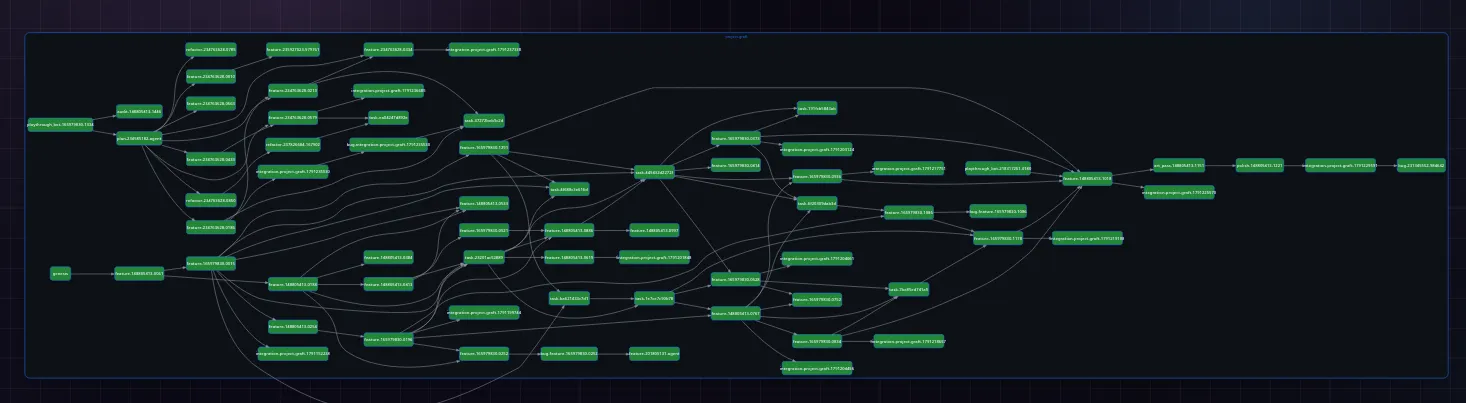
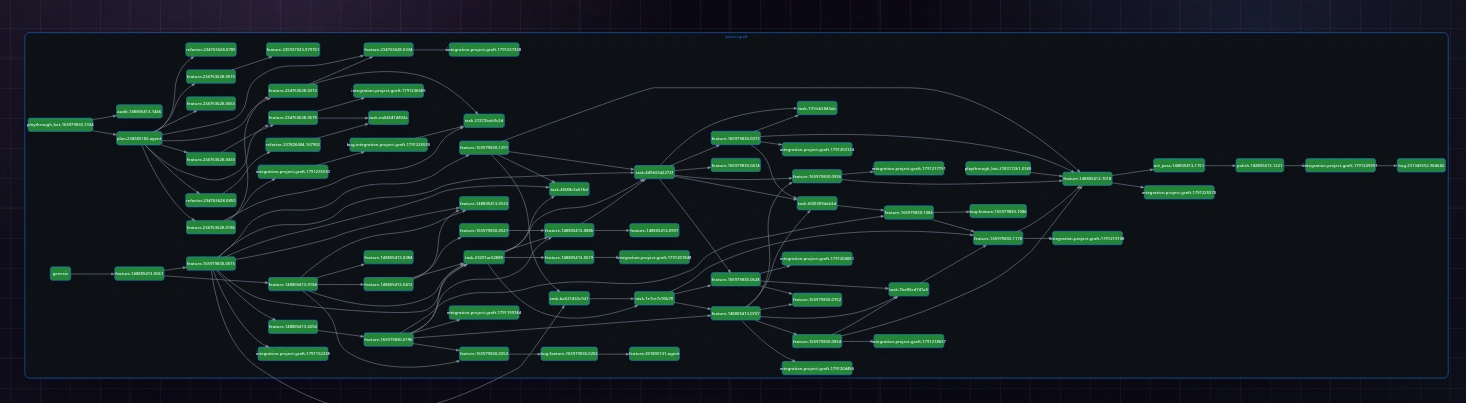
The swarm was running, and we had some load balancing around Unreal Engine.
I set the maximum number of agents to eight and went to bed.